Footprints, Fractures
and
Fossils
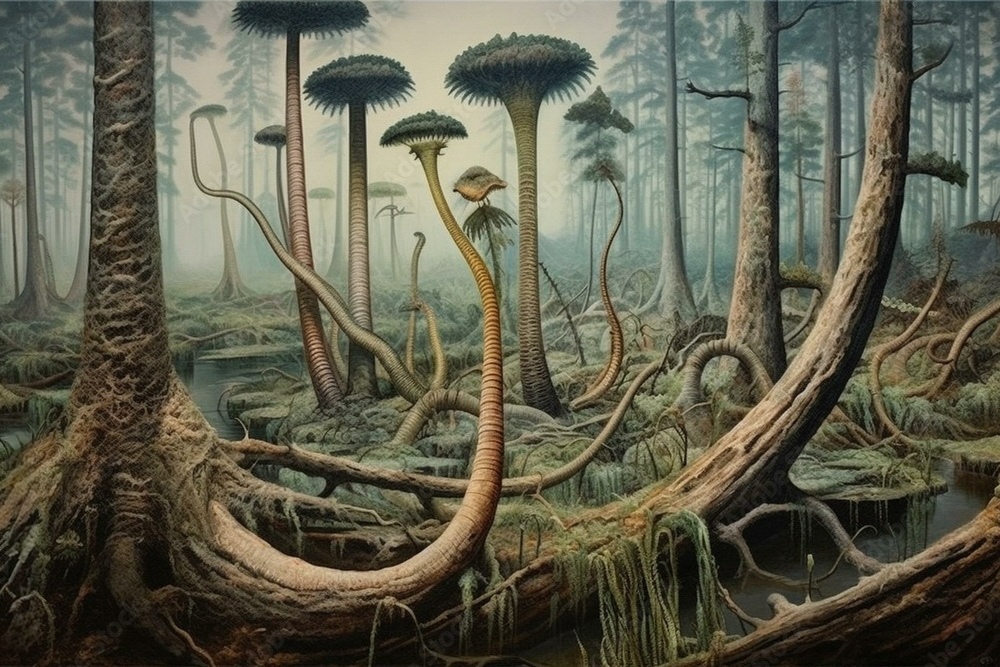
An artists impression of Eryops sp., a temnospondyli possibly an ancestor of the animal that made the footprints on the rock at Brimham 320 miilion years ago.
Footprints, Rock Fractures and Fossils
An often overlooked, possibly unique, feature of Brimham are the remarkable massive fractured and split rocks across the site and hidden away are fossils of life during the Carboniferous period.
“Salamander” Footprints
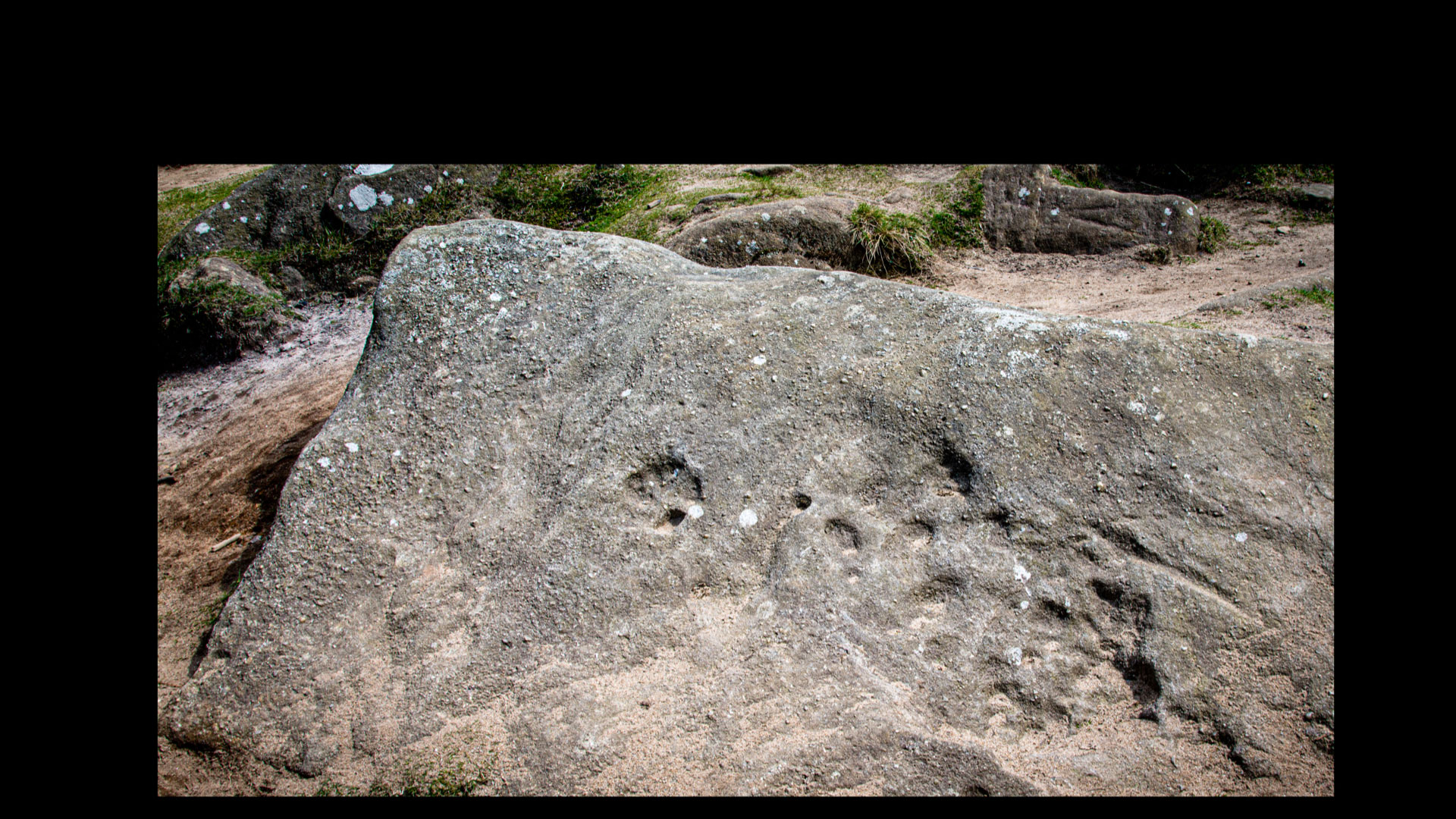
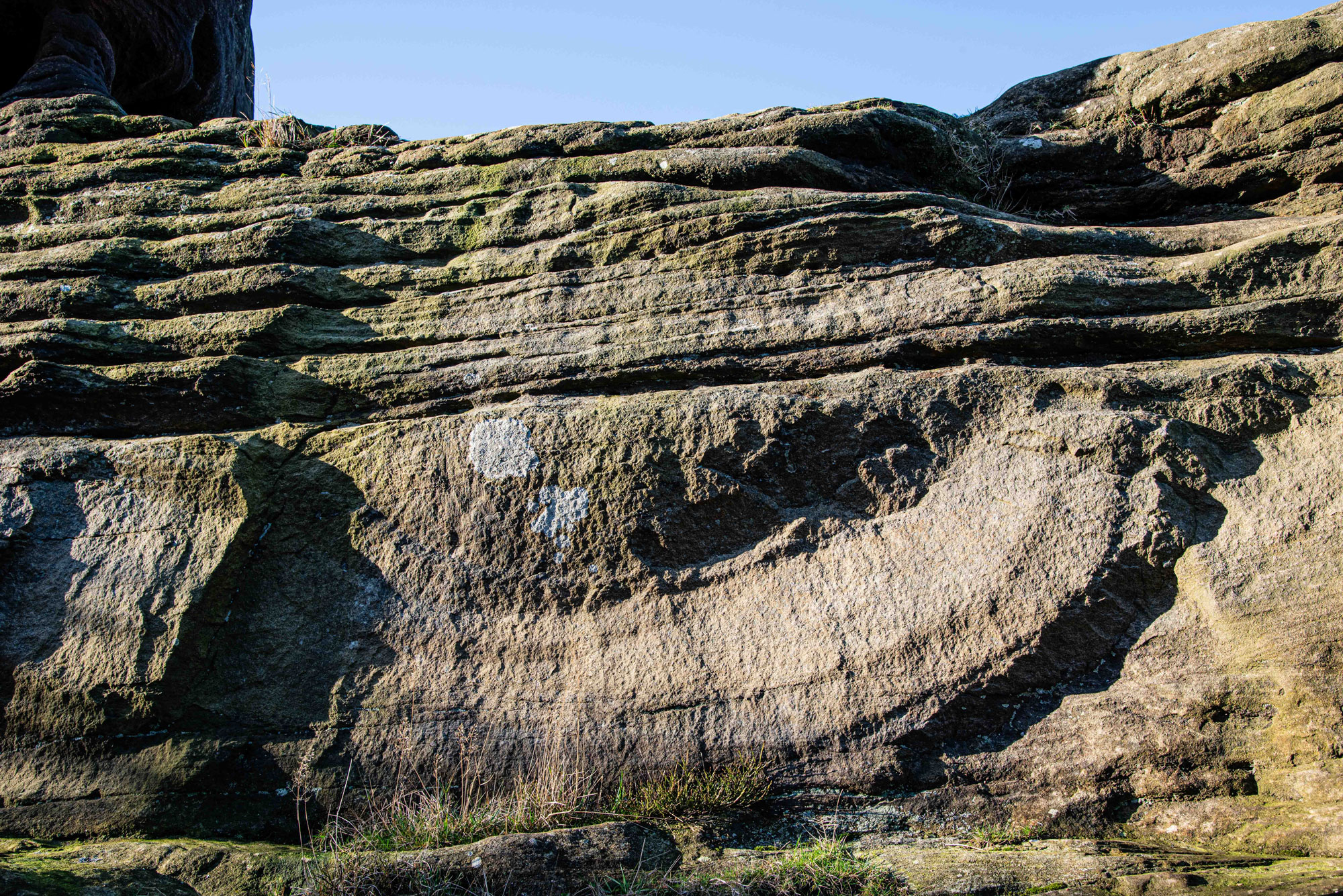
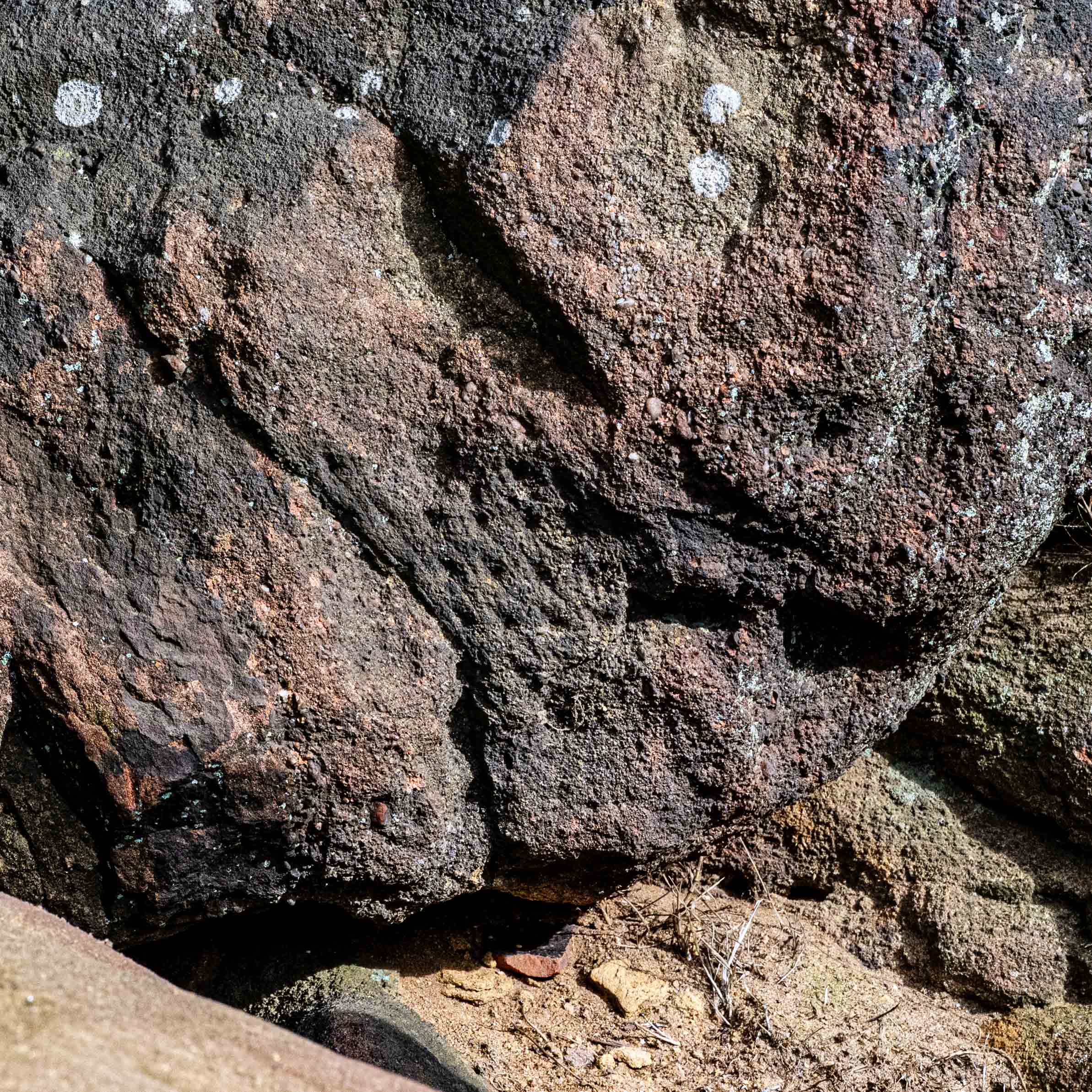
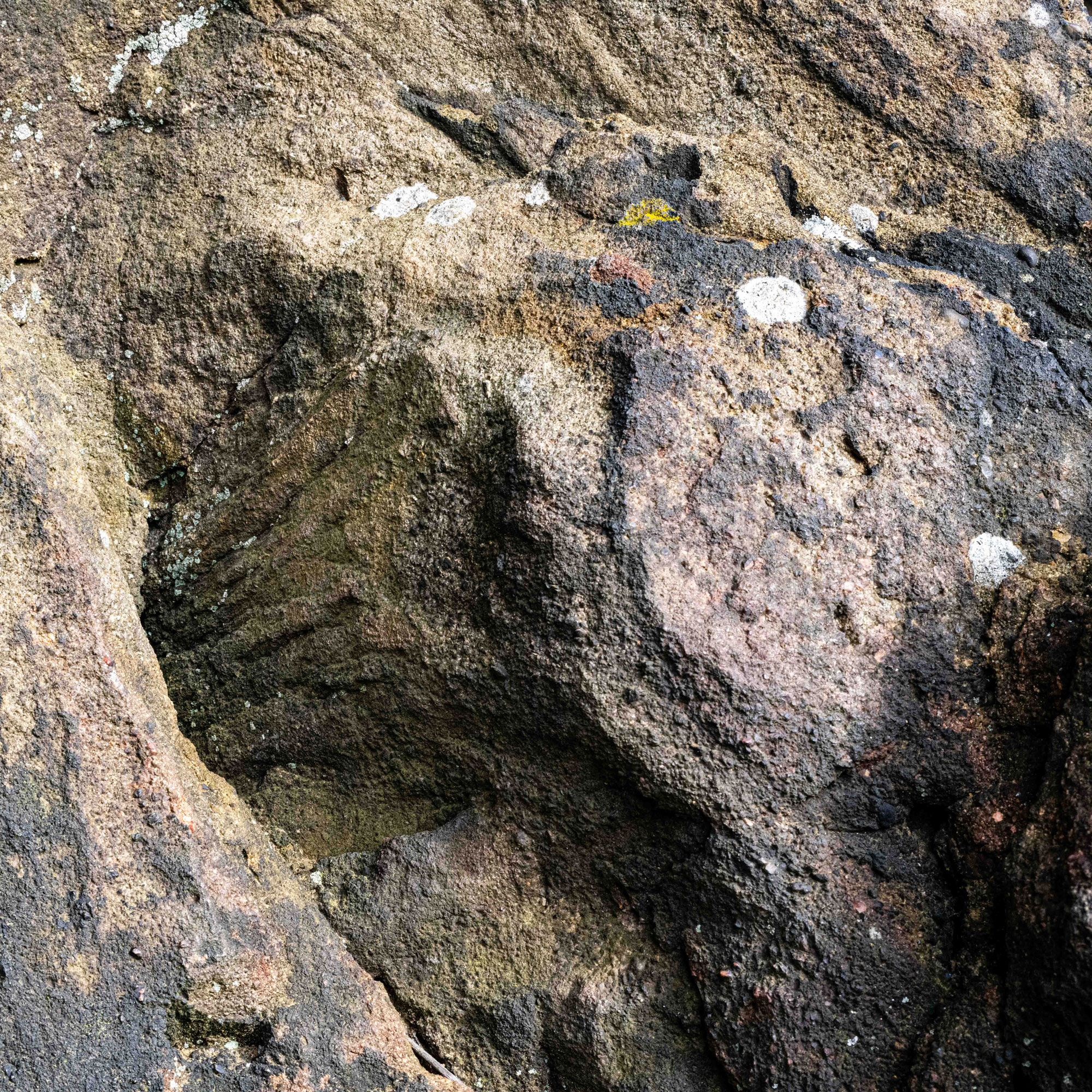
On a rock at the base of the cliff under Lover’s Leap are a set of distinctive marks and indentations.
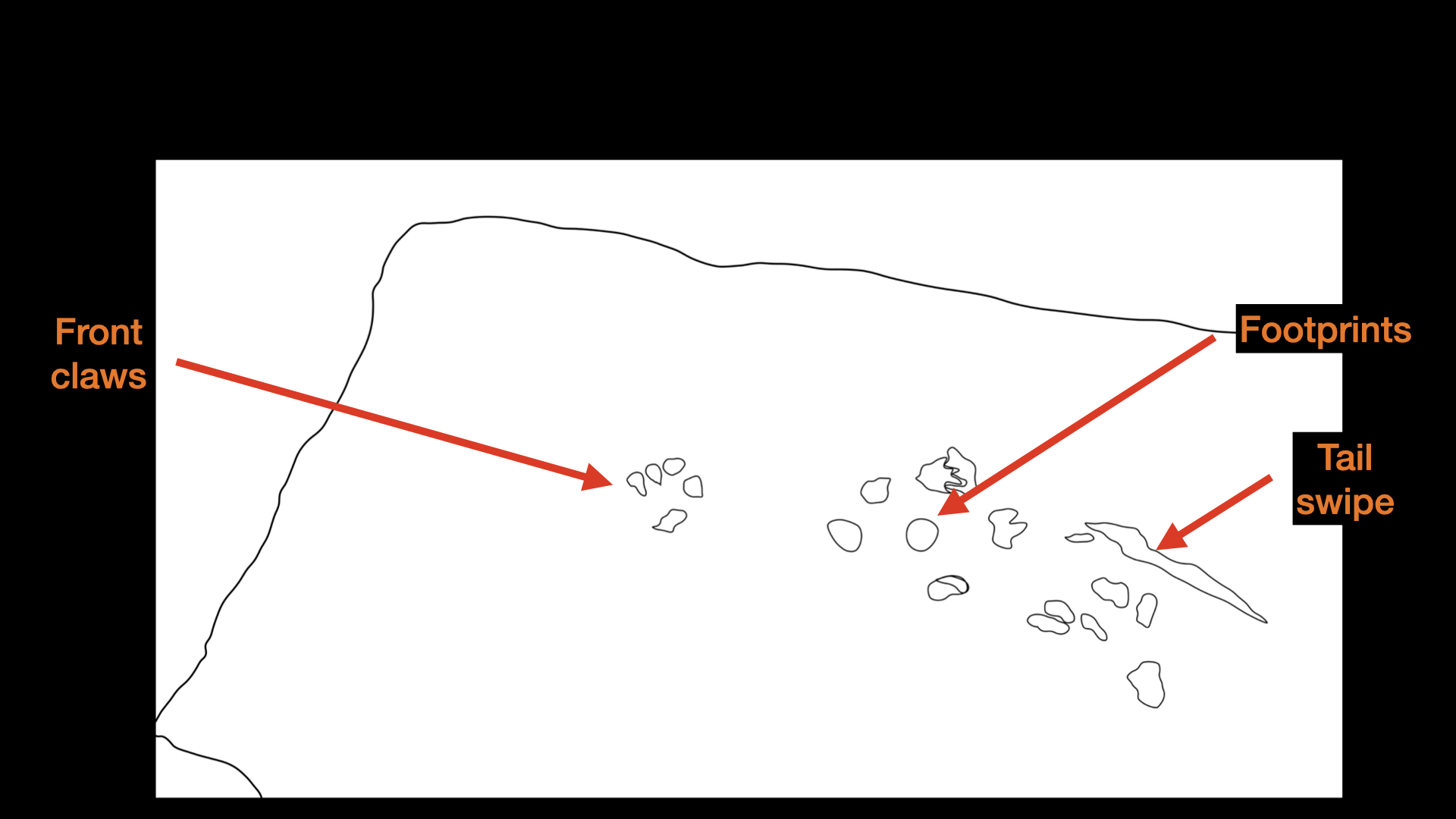
These have been interpreted as the claw marks, footprints and even the tail swipe of a large amphibian animal living during the Carboniferous period and present in the area 320 million years ago.
The animal was more than likely a temnospondyli, a large primitive amphibian, an apex predator that lived in the streams and rivers of the Carboniferous period, with some species growing up to several metres in length.
Rock Fractures
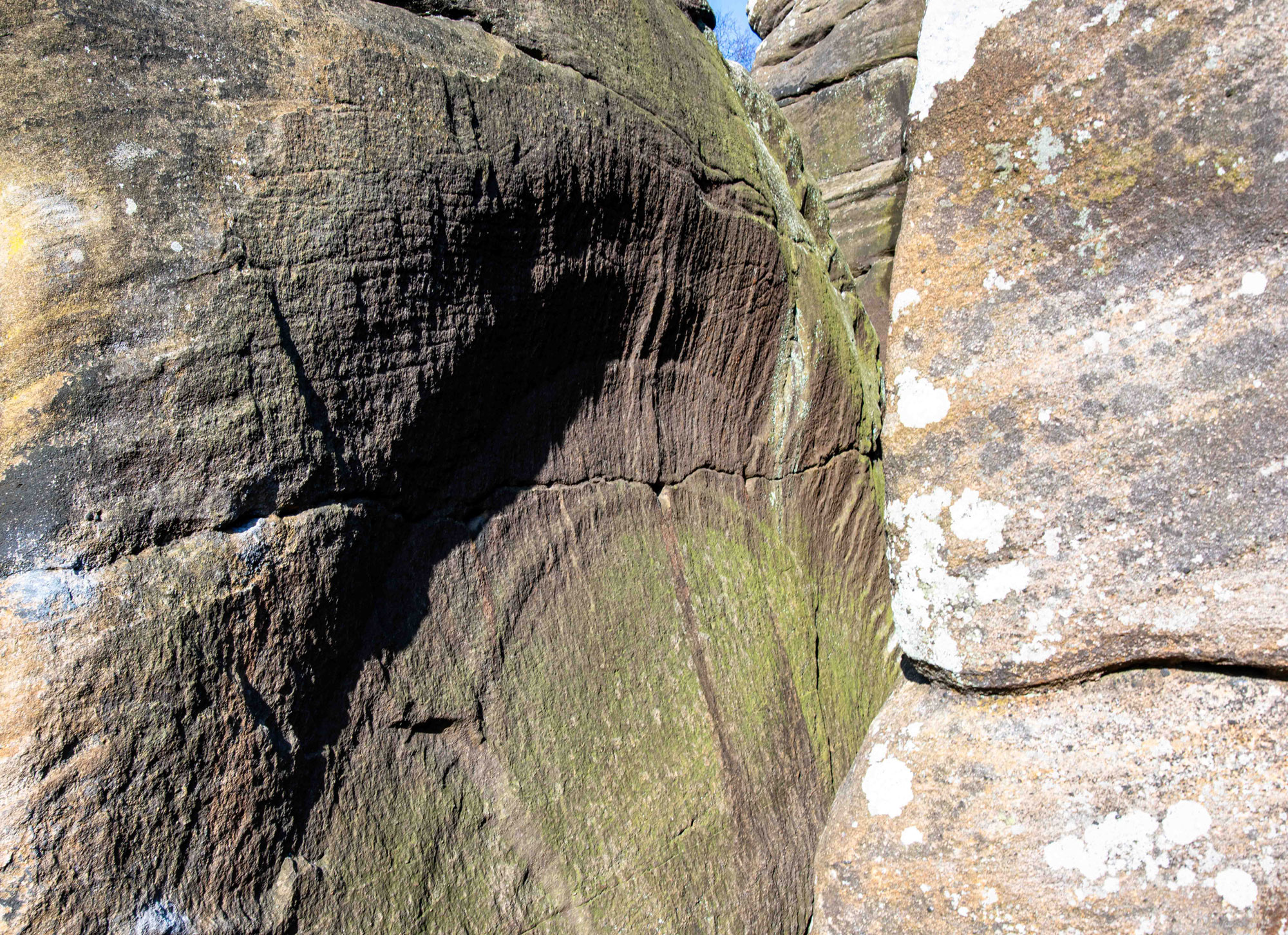
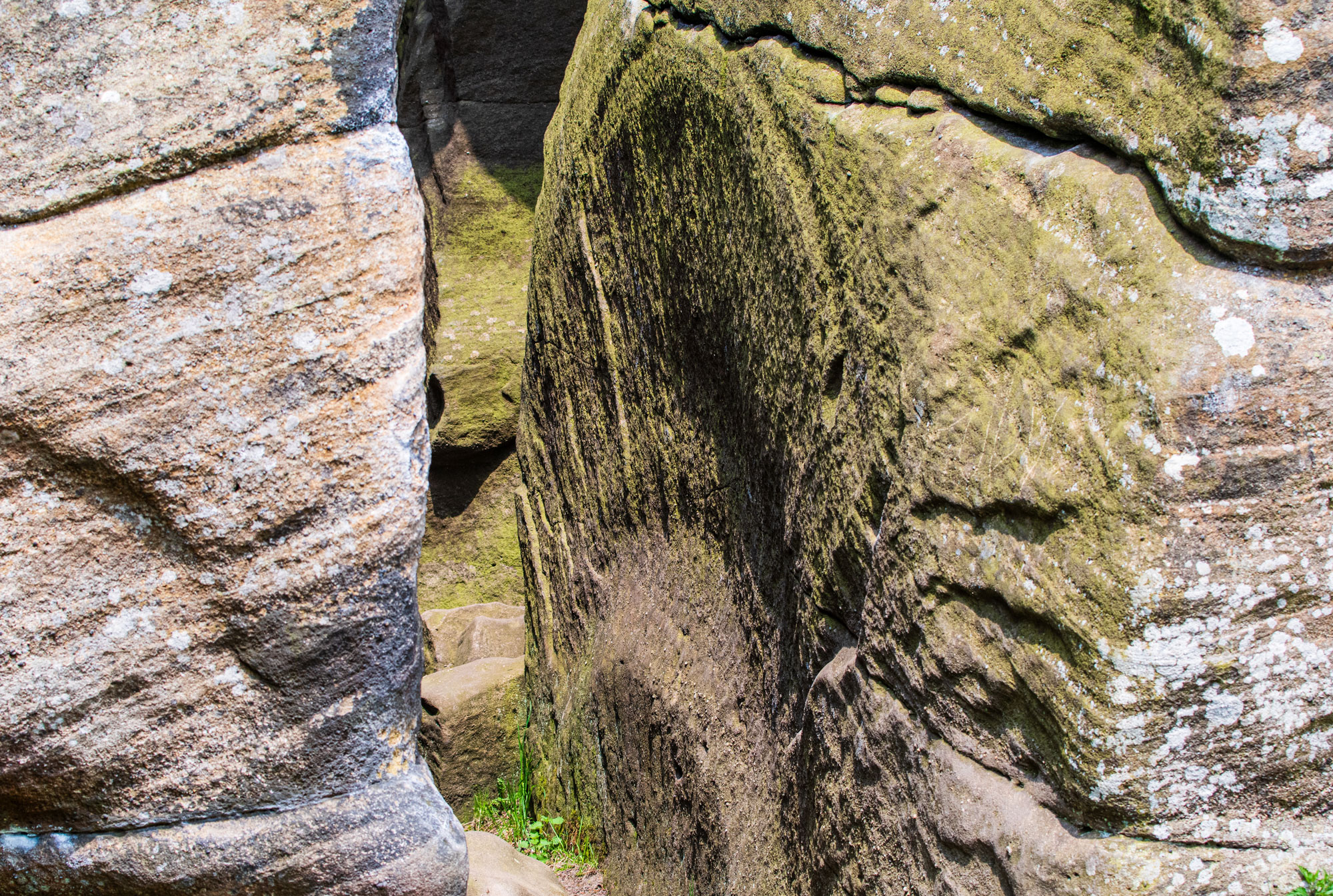
A remarkable feature of Brimham, known to the earliest visitors, is The Great Split Rock, a huge Millstone Grit block that has been split in half leaving a gap large enough to walk through.
Fracture
Fracture
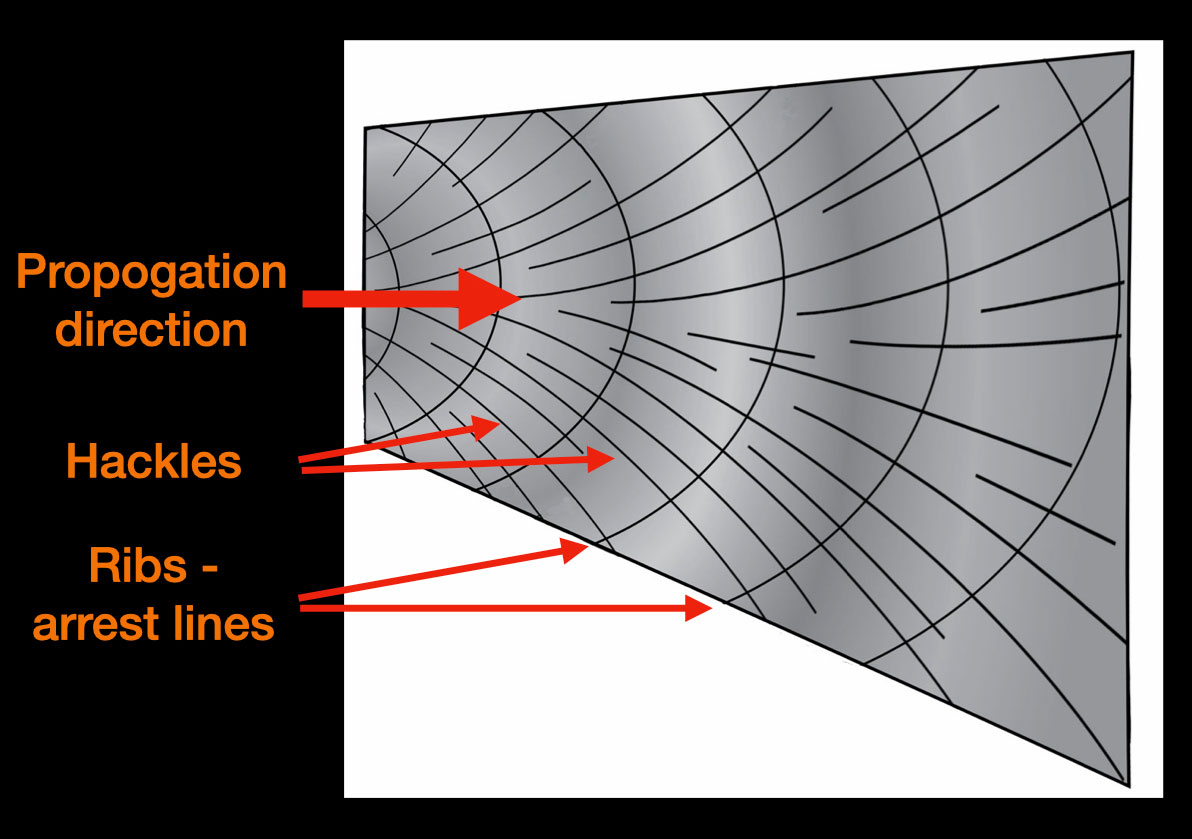
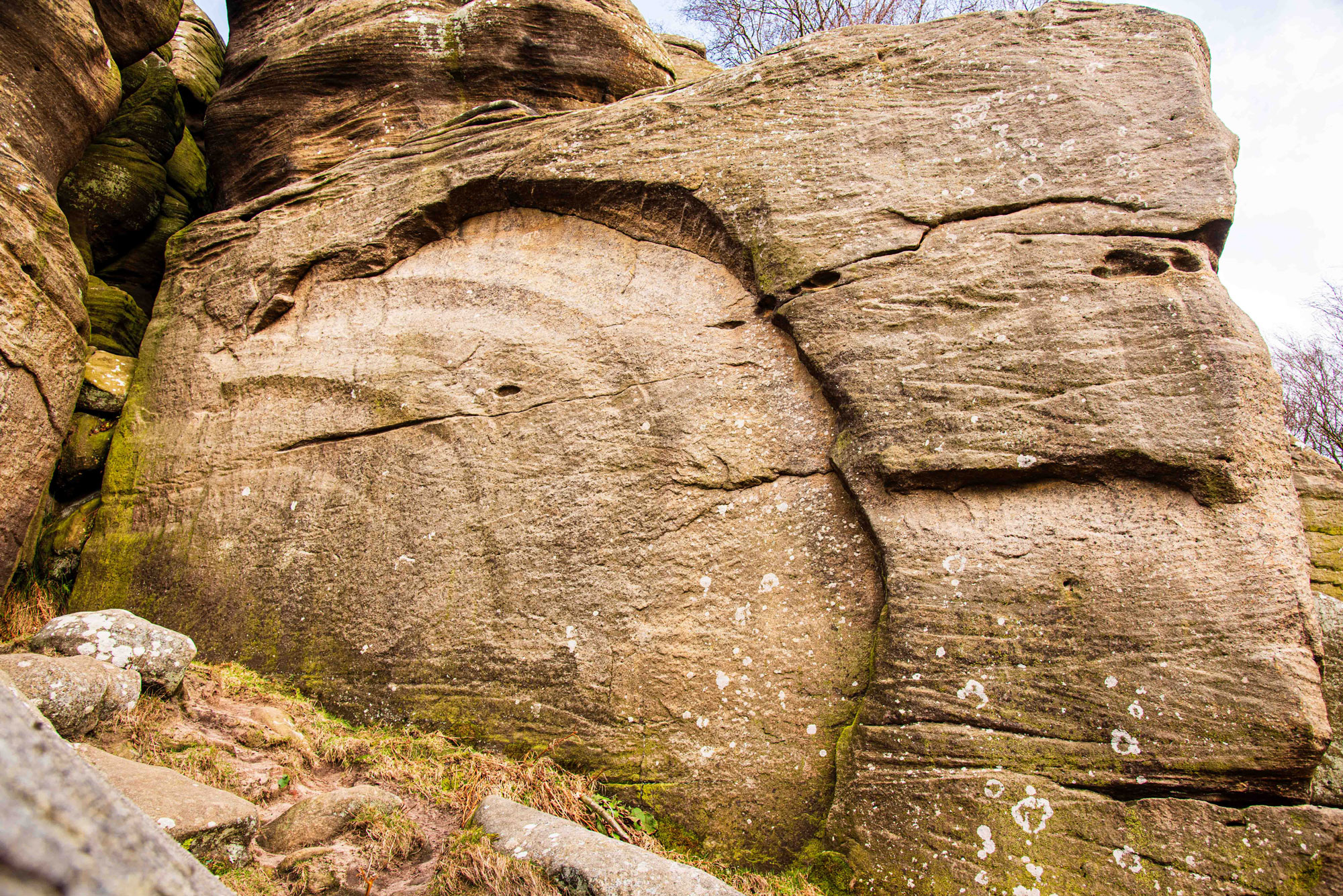
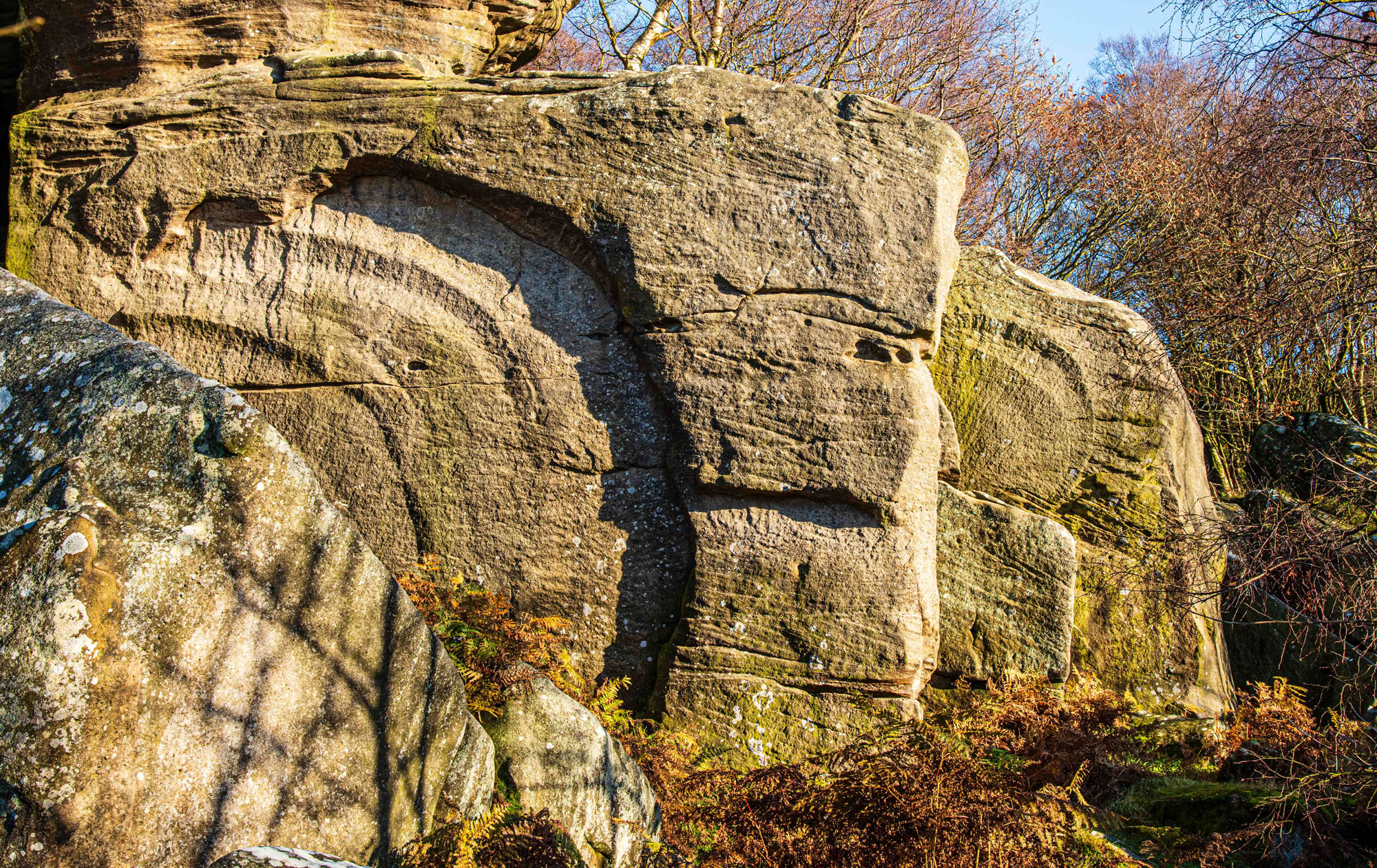
The rock is unusual in that the fracture features on the two sides are very well preserved and are visible as mirror images on both the left and right hand sides. The symmetry is very visible and has not been distorted or erroded away.
Fracture
Fracture
Fracture
Fracture
Fracture
Fracture
Fracture
Fracture
Fracture
Fracture
Fracture
Fracture
Very few fossils can found at Brimham but at the base of the Eagle Rock can be found two fossil plants, Lepidodendron and Calamites.
Lepidodendron
A primitive vascular plant
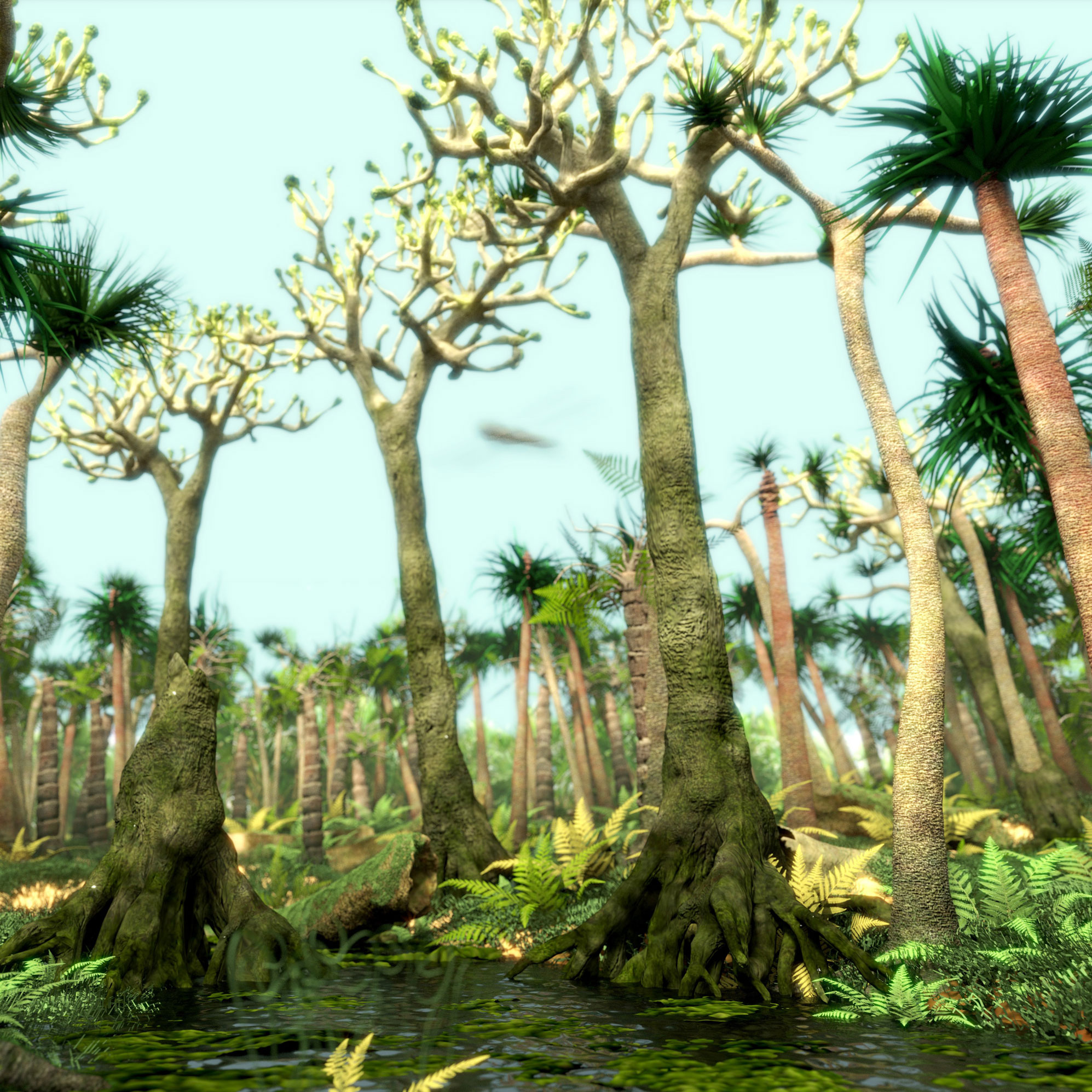
Coal forming forests
Calamites
Ancient horsetail
Ancient horsetail
Carboniferous swamp